
Meet John McKinney

John McKinney is a lifelong Democrat who has dedicated his life and career to upholding the principles of equal justice for all.
I was born and raised in Passaic, New Jersey, a working-class industrial city about thirty minutes from New York City.
My mother and father passed away when I was two and five years old. My eldest sister, Ora Jones, took me in and raised me along with her three children and another sibling as a single mother. She worked full-time on the second shift while raising five children between the ages of five and thirteen.
My sister was a superwoman. She sacrificed her own life to give us stability and opportunity. From her, I learned hard work, discipline, persistence, respect for others, and service to others. Anything good about me traces back to her example.
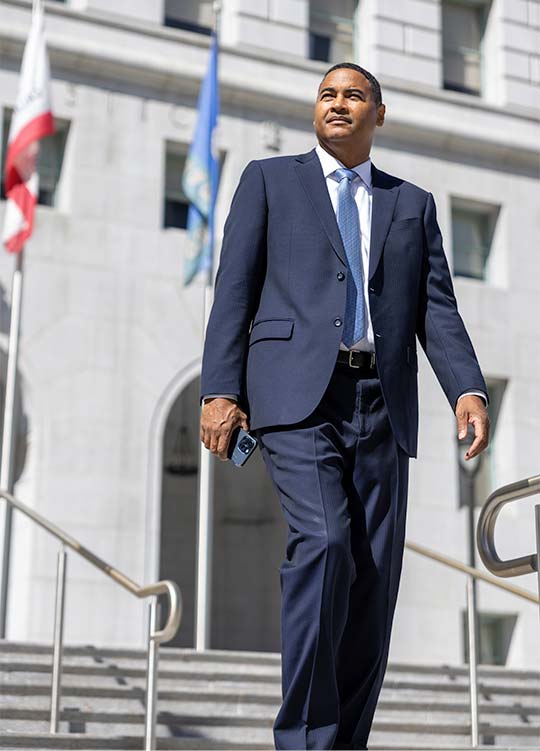 I was born in 1968, and I came of age during the crack epidemic of the 1980s. Almost overnight, neighborhoods changed. Hard-working people fell into addiction. Friends who were strong students or talented athletes began chasing fast money in the drug trade. Violence, incarceration, and aggressive policing became part of everyday life. That environment forged my character.
Fortunately, my sister’s guidance and the values she instilled in me gave me discipline and perspective. Many of my friends were pulled into the drug trade; some went to prison, some battled addiction, and some lost their lives. None of us escaped the impact of that era. Those who survived carry its lessons with us and hope never to see it repeated.
After high school, I enrolled at William Paterson State College—not because I wanted to, but because my sister insisted. Tempted by the appearance of quick success around me, I dropped out after my first year to work and make money. Over the next several years, I held a wide range of jobs: fast food worker, blacksmith in Jersey City forging truck springs, carpenter’s apprentice, house painter, warehouse worker, delivery driver, and temporary employee at Pfizer. I learned the dignity of labor and the discipline of showing up every day.
After several years of working, and encouragement from my sister, I returned to school. I attended community college at night while working full-time during the day, taking a full course load year-round. After two years, I transferred to Rutgers University and continued working full-time while finishing my degree. During that time, professors encouraged me to consider law school, noting my argumentative writing style and passion for ideas.
Despite limited funds and never having been to California, I made a leap and applied to and was admitted to UCLA School of Law. In August 1994, I arrived at UCLA with $250 in my pocket. It was a defining act of faith.
After graduating in 1997 and passing the California Bar, I joined the Los Angeles County District Attorney’s Office. From the beginning, the pace was intense. I handled busy misdemeanor calendars, preliminary hearings, and trials almost immediately. The learning curve was steep, but I found my footing.
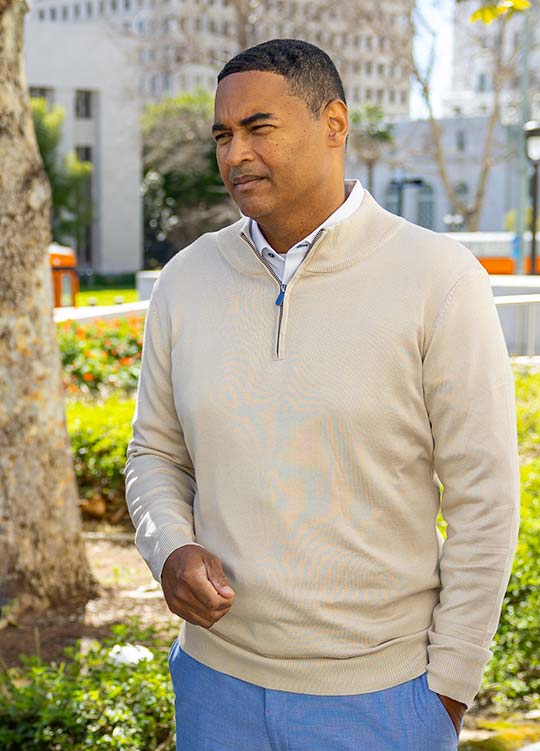 I later transferred to the Compton courthouse, where I matured as a prosecutor. There, I learned from seasoned attorneys and developed my trial skills. I eventually joined the Victim Impact Program (V.I.P.) Unit, prosecuting sex crimes, domestic violence, child abuse, and elder abuse cases. The work was emotionally demanding but deeply meaningful.
Over the years, I went on to prosecute crimes in many other divisions, including juvenile court, the Hardcore Gang Division, and eventually the Major Crimes Division. There, I prosecuted numerous murder cases, including the killing of Grammy Award-winning artist Nipsey Hussle and the murderers of Xinran Ji, a gifted engineering student at USC. In total, I have tried nearly forty murder cases. In each one, I carried the weight of the victim’s story into the courtroom. Every defendant I prosecuted for murder was convicted. Every victim’s humanity was honored.
Beyond the courtroom, I have participated in professional training programs, community outreach, and charitable work. Years ago, a colleague and I started a toy drive in partnership with the Compton Salvation Army. It continues today, delivering thousands of toys to children in need.
My journey—from a working-class neighborhood shaped by hardship, to standing in court and announcing “For the People”—is rooted in the lessons my sister taught me: work hard, persevere, serve others, and never forget where you came from.